Introduction
I watched Resident Evil (2026) in theaters when it came out a few weeks ago, and it was a blast; absolutely one of the best video game film adaptations to have ever been gifted to us by Hollywood. The first half of the film was a masterfully crafted slow walk into hell, after which, we spend the second half traveling through hell itself, at a slightly more break-neck pace. It was as if “Alien,” and “Aliens,” had been stitched together into one movie; both being equally good in different ways. I’ve been a fan of director Zach Cregger since his first major film, Barbarian. He’s so far been a very worthy admit to the school of newer horror directors (with Robert Eggers, Jordan Peele, etc) who’ve been able to craft great horror films that also have something thought-provoking to say about the real world.
Cregger himself has denied that his films have anything to say about the world beyond his own personal feelings (Weapons, for example, was apparently about his own personal grief). However, we’re going to ignore his subtle pleads to stop over analyzing his work, since it’s much more fun and interesting to apply our own interpretations onto works of art than it is to admit that the author made the curtains blue only because they liked the color blue. The best kind of social commentary, after all, is often enough the kind that is seemingly completely unintentional. Thus, when I watched Resident Evil, over the shoulders of both our protagonist as well as every grotesque monster he encountered, I saw, possibly, “Cregger’s” most socially relevant message yet: How people-young people in particular, are in a fighting struggle to hold on to their sense of personal autonomy, in a modern world that seems hell bent on prying it from them.
Before we go any further, I just want to say that I’m not normally a “film analysis” person. Sure, I’ve thought about films before, many times, but this would be the first time that I fully sat down to write a multi-page long “treatment”. Hopefully I can do a decent enough job. Also, I didn’t feel a need to write out every detail of every scene in the film in my analysis; instead, I’m writing with the assumption that the reader has also seen the movie. Oh, you haven’t seen the movie yet? Well then go watch it then! It’s definitely worth your time! Finally, I want to get across that by personal autonomy, what I essentially mean is the freedom to control your own life.
The Analysis (SPOILERS AHEAD)
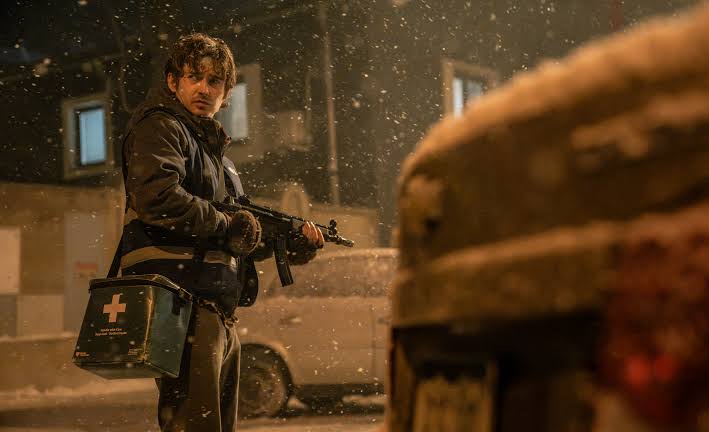
The film starts with our main protagonist, Bryan the medical courier, finishing what is supposed to be his final delivery for the night. The story is set into motion after Bryan accepts one more delivery, supposedly only because it pays double. We cut to him in his car, on his way to the drop off, while on a call with his girlfriend, Michelle. The conversation gives us a clear picture into his current situation with Michelle: she is pregnant, but Bryan is reluctant to keep it. He clearly wants to avoid saying that they should keep it but is not sure how to say that they shouldn’t keep it. So, he avoids the pressure of having an in-person conversation with her while trying to covertly push her from afar toward not keeping it by prodding her to “think about it,” and how, “our life is amazing right now”. It’s a relatable situation – and conversation, for millions of young real-life partners who have been in the exact same situation. Somebody gets pregnant, and one person isn’t quite sure that they want to become a parent. Bryan clearly wants to hold on to the personal freedom that he has now and sees becoming a father as something that would only take away from that. Although, to be reasonably fair to Bryan, he’s honestly probably right. We’ll come back to this.
Let’s examine Bryan as a person. Despite his avoidant and insensitive handling of his situation with Michelle, the film shows us multiple times that Bryan isn’t really such a bad person. After he accidentally hits the lady in the road, he goes out of his way to go find her in the woods. He then helps her back to his car, intent on driving her to the hospital. When pulled over by a cop, he’s completely honest with him about what happened, and accepting of potential consequences for it as long as he can finish his delivery. Later in the RV trailer blocking the tunnel, he tries to pick up and help the scared little girl despite seeing her mutated feet. Further on after that, after the Umbrella staffers who pick him up are killed, Bryan makes the decision to continue the package delivery (which he now knows is a base necessary for a cure). That’s despite never having gotten an answer to his question as to what happens if you’re bitten. For all he knows at this point, he could just need an aspirin or a mild surgery. A bad person might have just kept on driving. A bad person might have just left that little girl scared and alone. A bad person might have just tried to save himself over finishing a delivery. Bryan isn’t a bad person. He’s not a perfect person either, rather, he’s just what most people are: decent, but human and flawed.
Bryan, a normal person – an average person, is thrust into a difficult situation – two of them, actually: the nightmare delivery job that he’s currently experiencing and the existential predicament of soon becoming a father. In both events, Bryan enters a world full of external circumstances that he has limited control over, and where the only new paths or actions available are ones within the range that said circumstances allow. In other words, he is no longer as free to take any action he wishes at any given moment. As a parent, your personal wants and needs take a backseat to those of the child, co-parent, and/or family unit. The freedom you once had to control your time, schedule, activities and more withers in the face of parental responsibilities. A responsibility that most decent people accept when they have a child, even if begrudgingly. Similarly, Bryan keeps to his responsibility of delivering the package, despite the series of horrors he encounters. He could simply walk away in any direction that might lead him away from the horrors, yet he responsibly soldiers on, facing threat after threat in uncertain situations mostly outside of his control. Even with the limited control he does maintain – in the guns he finds, human error and happenstance incidents still lead to further uncontrollable circumstances (his car immobilized, being bitten, the Umbrella staffers killed). It seems that every time he manages to regain control, it’s again stripped away from him just moments later by another new circumstance, leaving just the stress of what might come next as the only true constant.
Bryan spends most of the film in this back-and-forth struggle. Then we enter the third and final act of the film, marked by Bryan’s breakdown in the garage as his distressing and hopeless current situation truly sinks in. He leaves a final voice message for Michelle, telling her that he does want to have a kid with her, and that he thinks she’d make an amazing mom. But this message isn’t really about Michelle. It’s about Bryan and his coming to terms with and willful acceptance of his future responsibility as a parent. He still knows that he will lose some control over his life, but in choosing to accept it, he at least gains some control over his mixed feelings about it. He is no longer as afraid of the coming changing circumstances. Circumstances that, while themselves ungovernable, can only ever fully govern his external surroundings, and not his internal environment. So, he accepts that his freer personal identity will be superseded by the more restrictive identity of fatherhood. The next best question to ask is, well, why? Bryan didn’t suddenly accept fatherhood just because he saw that picture of a family on the back of that car. No, it had to be more, but, and sorry to use this move again, we’ll come back to this.
The third act of the film gives us a shift in Bryan’s level of control over both situations. He gains some control over his existential situation, and this is represented in his current situation by his bolder responses to every following trial. First, he makes the decision to take the elevator despite a warning to “play it safe,” by taking the stairs. The vomit spitting monster attacks him on the ride up, and Bryan just climbs up and confronts the monster directly with little hesitation. He then uses the opportunity to his advantage by using the spitter to finally, for the first time, successfully fight back against the amalgam monster that’s been chasing him all night. The spitter is thereafter also dispensed with. Next, he comes to his most terrifying looking trial yet, a nightmarish looking lab with no safe corner anywhere in sight. Bryan goes through it anyway. The first monster encountered is a mutated baby, representative of Bryan quite literally having a direct confrontation with both his current physical fear and his existential fear of fatherhood. He makes it through, though, even as a horde of zombies is on his heels, and then smartly uses said horde to finally fight off the returning amalgam for good.
Now we come to the end of the film, where Bryan, our hero, succeeds in his mission to deliver the essential cure base and is subsequently saved right? Nope, actually, Bryan delivers the package, but to self-interested scientists who ignore his haggard condition then clumsily fail to save him as he succumbs to the virus. Bryan becomes an amalgam himself, consumes the scientists, the cure is lost, and, likewise, Bryan is lost. Wow, what an ending. Well, as per many sources online, it seems to be the least liked part of the movie. I, however, was perfectly fine with it. Honestly, I saw a bad ending coming from a mile away after Bryan was bitten, because, let’s be honest, there’s no way a random “glorified Postmates driver,” – in Bryan’s own words, was going to put an end to Umbrella’s eventual world destroying virus. I liked the ending, not only because it was accurate to the lore, but also because it hammered in the overarching theme of the movie from yet another angle I’ve mentioned but have yet to discuss: how the modern world itself has encroached on young people’s sense of freedom over their own life – their personal autonomy.
Bryan has traversed hell itself, conquering gruesome and persistent monsters, while having a personal journey through it all, all to fulfill his mission of delivering that package. So it only makes sense that he should win in the end, right? Well, he doesn’t. But why? Well, let’s think about it, why did he do all of it, for what gain, and for whom? Well, firstly, because Bryan is a decent person, who accepts responsibility when he is given it, and sees it through to the end despite challenges. But who is his current responsibility to, exactly? He chooses to carry on the mission long after he necessarily has to, but why? Well, because he has a responsibility to both his employer (let’s say Company R) and the package recipient, who is, of course, the Umbrella Corporation, since it’s their scientists he’s delivering it to. A responsibility he keeps to, way late into the night, for any number of reasons: to avoid a conversation, for the money, for fear of losing his job, because it might save a life, to keep himself in good standing with his employer, etc. Bryan effectively did everything that he did in service of Company R and Umbrella, yet Bryan was really only ever a tool that was being used by them to get a job done – a tool that they had control over the entire time.
Bryan was afraid of losing his personal autonomy, because of a coming baby, but his current journey was one that was being laid out for him by the corporations above him. He completes his assigned mission, but just as the virus starts to wrest control away from him, both simultaneously representative of how the company has already taken away most of his control. The top-level scientists, up in a tower, also view Bryan, an average person, as simply a company tool, as someone to barely be taken into consideration except for when he’s being useful, until they too, are consumed by the corporate virus that eventually spares no-one. In the end, all of them were the company’s tools, even those given a “license” to look down on “lesser” tools. The only ones who were ever really in control were those in control of the company – the executives and shareholders. In the end, Bryan wins in his internal struggle but loses the battle against the external forces that were always right above him. He could’ve possibly stopped at any time, gone right home, had that conversation with Michelle, had the kid, started a family, and continued his own life, but in the end, he had to do what the company wanted, and the company is what got his life.
If it’s not clear by now, what I’m really critiquing is how modern capitalism has given us a world where people are forced to give much of their life to work instead of their own lives. We have less personal autonomy in our lives largely because job pay remains stagnant, the dollar’s power shrinks every year, and the cost-of-living just climbs higher. So, we’re forced into making either one of two real choices: work more hours so as to obtain better financial means by which to live our life, but in doing so, end up with much less time to actually live it. Or, work just enough to keep a roof over our head, but accept having little to no extra finances in our life. Thus, we postpone living our lives to the extent that we really want to, and, importantly, doing things like pairing up and having kids, even though many of us probably do want to do those things. Bryan was always ready to become a dad deep down (as evidenced by his fatherly handling of the little girl and eventual acceptance of fatherhood), but like many young people, he’s stuck giving most of his time and energy to his job, and so, understandably, is afraid of giving any more of it up.
Other aspects of the film play into this idea. The amalgam chasing Brian throughout the film could be interpreted as the rising existential dread right behind us as we continuously postpone personal life goals and milestones. The rising fear of regret looms, but the fear of losing what little we have now looms larger. The fat man in the sewer could be representative of people who deal with the problem of modern capitalism by consuming, because buying things, whether it’s food or trinkets, give them just a little sense of control back; little “hits” of personal power that can become addictive – lead to over consumption, and, if such people are not careful, sink them lower (like into a sewer) and ultimately consume them in turn (as shown by the rats). Finally, the infected people throwing themselves off the buildings could be representative of the many people who are simply left behind by capitalism. Not just the people who fight on to their last breath but face too insurmountable of a wall, but also (TRIGGER WARNING) the people who, after meeting such walls, choose, tragically, to leave on their own (hopefully, no further explanation is needed here).
So why does Bryan finally accept fatherhood in the end? Well, because as the hopelessness of his current situation really sinks in, and his death seems already scheduled, he realizes what many people eventually realize. That his life has already been taken from him. By a system that has already turned him into an automaton, destined for a single use job, and made to be thrown away after. With every new horror encountered, death has repeatedly licked at Bryan’s face and tasted the sweat of never having really lived. Bryan has realized, too late, that he does want to become a dad deep down. That even as his time and energy is taken over by his job, he is still willing to give up what little he has left to at least try to live the life that he actually does want to live, that of being a father. From here on out, we get a new Bryan, one who fights much harder for his life, one who is ready for the extra challenges that’ll be brought on by fatherhood, and, fundamentally, one who has something more important to live for. Still, it’s a bittersweet revelation, because Bryan’s continuing fight remains the one that the company has designed for him, and his goal still really that of the company’s. In the end, even with the renewed rigor and resolve he has for his own life, it’s already too late, he has already given so much of himself to the company, that, the company – like, the virus, has already succeeded in taking that life that he always did want completely away from him.
Well, that was a lot more than I expected to write! This movie really was as thought-provoking as it was entertaining. I really hope it ends up serving as a blueprint for future Resident Evil movies. I know that I absolutely looked way too into it, but this was a lot of fun to write, so I’m sort of glad that I did. I just hope that, for the most part, my words and reasoning made sense.
A Few More Thoughts
I wanted to jot down a few more things without necessarily having to reference the film. As I said, to me, the movie’s subtext is about how young people are increasingly giving up their lives – their personal autonomy, to the work demanded by modern capitalism. The demands of capitalism isn’t the only reason, of course, but I’d argue that it’s probably the most significant reason. It’s why happiness levels in the west are declining, social circles are shrinking, and less kids are being born. The birth rate in western countries may soon match that of some Asian countries, particularly that of South Korea (~0.75) and Japan (~1.14); two countries who have both famously raised generations of workaholics. Their young people are just a bit further along on the “losing their personal autonomy to corporations” timeline.
After going through destructive wars in the mid-twentieth century, both countries, wanting to catch up to the rising west, infused into their societal cultures a sense of economic duty and pressure to succeed. As a result, both countries did successfully catch up, but at the cost of personal autonomy for most of their people. It took only a generation or two, before young people began to look downward and notice the chain around their feet. Then, realizing that the chain is mostly permanent, the only thing left for them to do was to try and retain control in other areas of their life. When one already has one chain around their foot, they’re likely to work even harder to avoid a second chain. Thus, they not only avoid having children, but they often even avoid dating entirely. Instead, they choose anything else that might offer them some sense of their life back, such as, most famously, escapism through manga or video games. Young people in the west have also now noticed the chain around their own feet, but, personally, I think many of them are still in the denial phase of the timeline.
The last thing I wanted to touch on is this: So, rich countries are full of people with less money, time, and personal autonomy, which is why they’re choosing not to have kids, right? Ok, so why is it that, in many less well-off countries, the birth rates have not only remained stable but also risen? Here’s my answer to that: because it is possible to have very little in your life, yet much of what you want – or, a lot in your life, yet little of what you want. People are varied and complex in our needs and wants, influenced by more external and internal factors than I have the time to list out here. Here’s what I can say though: there is a man in a poor country neither of us can pronounce, that collects crops for a living and makes very little money. Yet, he leaves work on a bicycle he likes, to a cottage he built himself, to spend the rest of his day fishing, which he loves to do. Meanwhile, there is a man living in the west, who makes the average salary in his country. He makes just enough to live in a small city apartment, cannot yet afford a car, and must work a gig job during the evening, just to afford his favorite groceries. Which of these two guys do you think would be more open to having children, if even just slightly?


Leave a Reply