Introduction
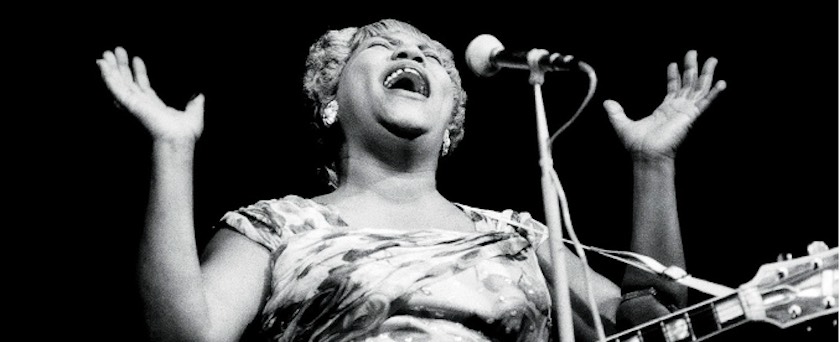
In 2018, a woman by the name of “Sister Rosetta Tharpe,” was inducted into the Rock and Roll Hall of Fame. As a lifelong fan of classic rock music, I’m typically at least vaguely familiar with most of the artists on the induction roster every year. But when I saw her name, the music encyclopedia in my head came up totally empty; I had no idea who she was. I read the short biography they provided for her, then tried doing some additional research, and was hard-pressed to find any information about her online. That was eight years ago though, and I’ve noticed recently that there are now more articles and videos about her floating around online. Her name and legacy seem to have finally gained a foothold in our collective consciousness. Thus, I wanted to take this opportunity to tell you about the world’s first true rock star.
The First True Rockstar
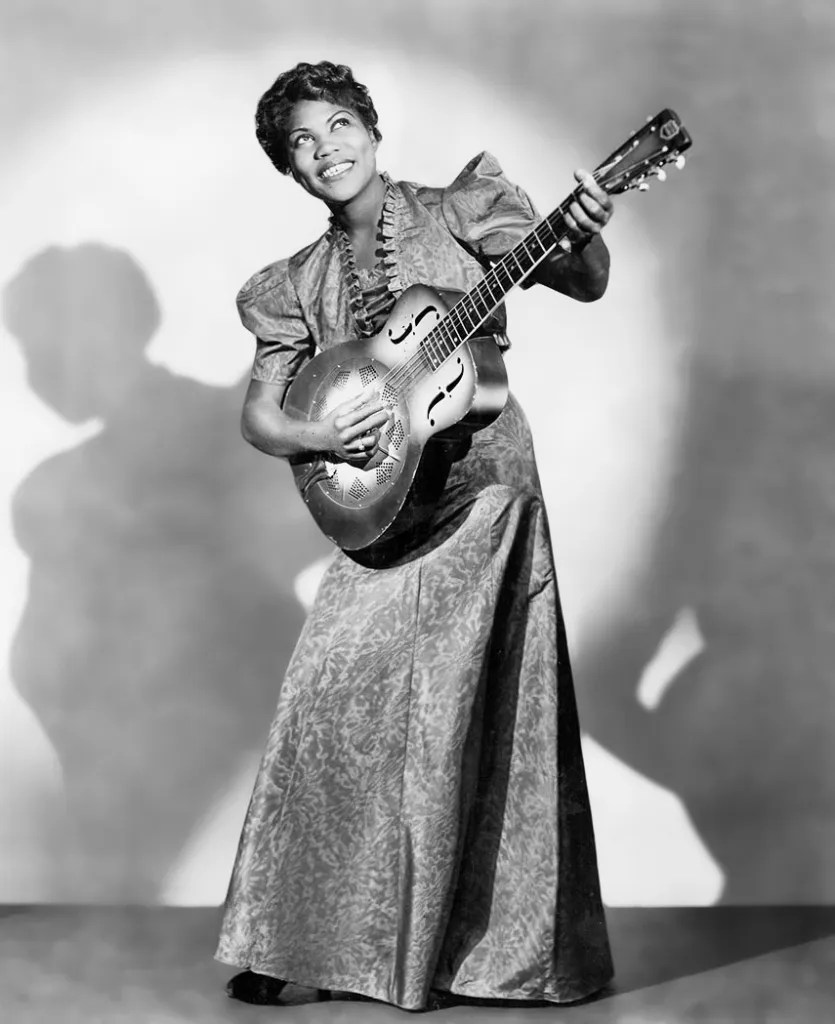
Sister Rosetta Tharpe, born 1915, was singing and playing the guitar by six years old. A musical prodigy, she spent her youth performing regularly with her mother in a traveling evangelical gospel troupe. Eventually, she’d start playing the electric guitar during performances, often with a fiery passion and attitude that was uncommon at the time, especially from a black woman. In 1938, she put out her very first record with four songs (“Rock Me,” “That’s All,” “My Man and I,” and “The Lonesome Road”). It was an instant hit and made her an overnight sensation. She became a music star and remained so throughout the 1940s and into the early 50s, although primarily as a “gospel/rhythm and blues” artist.
Yet, listening to her music, even her earliest hits, you can already hear the raw energy and foot stomping rhythms that would later be the heartbeat of songs by guys like Little Richard and Elvis Presley. Alongside her soulful blues-style singing, her songs often had the kind of complex guitar melodies and biting guitar licks that just wouldn’t be commonplace for over another decade. The song “That’s All,” for example, has strong punctuating guitar fills and an overall reverberating attitude in its mix; the same elements that’d later be present in a typical Chuck Berry record. Berry, after his own 1986 Hall of Fame induction, is claimed to have said that his career had been, “one long Sister Rosetta Tharpe impersonation” (Although, I should mention, this claim is unverified).
Tharpe not only added edge to her music and guitar playing before most others did, but she also lived her life with as much of that same (rebellious) edge, long before that lifestyle became synonymous with the rockstar ethos. She started as a gospel singer serving out worship hymns in churches but eventually began to also sing in nightclubs and non-religious theaters. Her music soon began to sound more secular, so much so that it upset many in the religious community, despite her songs still having clear roots in gospel. After becoming a star, she frequently challenged taboos and stereotypes. She regularly played to and with white folk. She was a black female guitar player, in a male dominated space, who could headline her own tour, while traveling via her own tour bus with her own name across the side. She was even rumored to have been romantically involved with women (at a time when homosexuality wasn’t just frowned upon, but also widely illegal). Additionally, she wrote songs with political and social themes (like “Strange Things are Happening Every Day”), which wouldn’t be fashionable in rock until the 60s (15+ years later). Finally, in 1951, she turned her third marriage into a stadium concert complete with elaborate stage setups and fireworks; it had 25,000 attendees. Now that is one very modern-like rock star stunt to pull!
The Music
Sister Rosetta Tharpe’s discography from the 40s has many of the prototypical essentials that would later become part of rock and roll’s early blueprint.
Here are some of my personal favorites:
“That’s All,” which I’ve already mentioned. The song has howling gospel-like vocals atop its swinging guitar tune.
“The Lord Followed Me,” from 1947, is another one that I found that sounds like a rock and roll song before rock and roll was even a thing.
“Strange Things Happening Every Day,” released in 1945, and a clear precursor to later blues rock, was written partly in response to the racism Tharpe frequently experienced at the time, despite being a music star.
“Up Above My Head,” originally from 1948, is a song that allows for no ambiguity about whether it’s really rock and roll or not. Just listen to that guitar shredding!
“Didn’t It Rain,” is a later 1958 release, but really showcases her guitar mastery as she infuses a traditional American gospel song with electric rockabilly blues.
Almost all the clips that can be found online of her performing seem to be from the 60s and later, when Tharpe was already in her 40s. Even at this age, she still has a powerful and commanding stage presence. I can’t even imagine what it would’ve been like to have seen her in her 40s heyday!
The Mother of Rock & Roll
Clearly, Sister Rosetta Tharpe’s induction into the Rock and Roll Hall of Fame was way overdue. She died in 1973 mostly forgotten by the public, and it took decades before her major contributions to music were recognized. She was a true rock star before even the most famous rock stars could pick up a guitar, and among the first who were unafraid to perform music that was controversial enough to stir the ire of religious groups. Thankfully, her story and amazing legacy was preserved by some niche music historians and now that her music is being looked at again, she’s been recognized as the spectacle and innovator that she was. In 2007, money was raised by fans to finally put a marker on her previously unmarked grave. The Rock & Roll Hall of Fame, upon her induction, proclaimed that, “she is the founding mother who gave rock’s founding fathers the idea.”
Story of a Pioneer: A Side Note
I want to share a final related side thought. Sister Rosetta Tharpe was a very early rock and roll pioneer that was somewhat forgotten by history (and is still not as well remembered as she should be). Much of that has to do with the obvious: she was a black woman, during a time of systemic racism. There’s no doubt in my mind that had she been a young, good looking, white man, like say, Elvis, she likely would have been both more acknowledged in her time and subsequently better remembered. Although, I think that her story is a common one. Tharpe didn’t invent rock and roll. No one person did. It was a combination of efforts from numerous different black artists that led to its creation. Some of whom are fairly remembered (Fats Domino, Bo Diddly, etc.), but most of whom, I’m sure, have likely been completely forgotten. That is the real story of a pioneer.
Most pioneers are not innovating on stage; they’re innovating in bedrooms and garages. And among these guys, only a few ever make it to the stage. Then, after being exposed to small niche crowds, it’s often the case that someone else comes along, is influenced by said pioneers, and, for one reason or another, goes on to become the one that we all think of as the “pioneer.” In the case of rock and roll, the clear reason was systemic racism. However, this is the story of many things that have been invented or iterated upon. New pioneers borrow from old pioneers, make slight alterations, then put their own name on the “new” idea. Edison didn’t invent the light bulb, he only perfected its commercialization, Oppenheimer’s atomic bomb was the result of decades of previous work by other scientists, and Steve Job’s (or Apple’s) “revolutionary” iPhone came over a decade after the first widely available smartphone. Yet, those names remain relevant in the collective consciousness of the public, while the names of earlier pioneers are largely forgotten. That is the story of a pioneer.
This is just a side thought I had while swimming around my brain as I wrote out Sister Rosetta Tharpe’s story. I hope it doesn’t come across like I’m trying to dismiss her legacy having been forgotten, because that is not at all what I was trying to do. I just had a ruminating thought about how unfortunate it is that this story of a pioneer is something that happens over and over again throughout history, and I wanted to ramble a bit about it.


Leave a Reply